

Quick Summary
Southeast Texas roofs tend to fail at the same weak points. Missing shingles, worn flashing and cracked pipe boots let water in quietly, while leaks often travel far from their source before showing on a ceiling. Hail bruising and lifted ridge caps speed up aging after storms, and overloaded gutters damage the roof edge. Each problem has a professional fix that stops small damage before it reaches the decking.
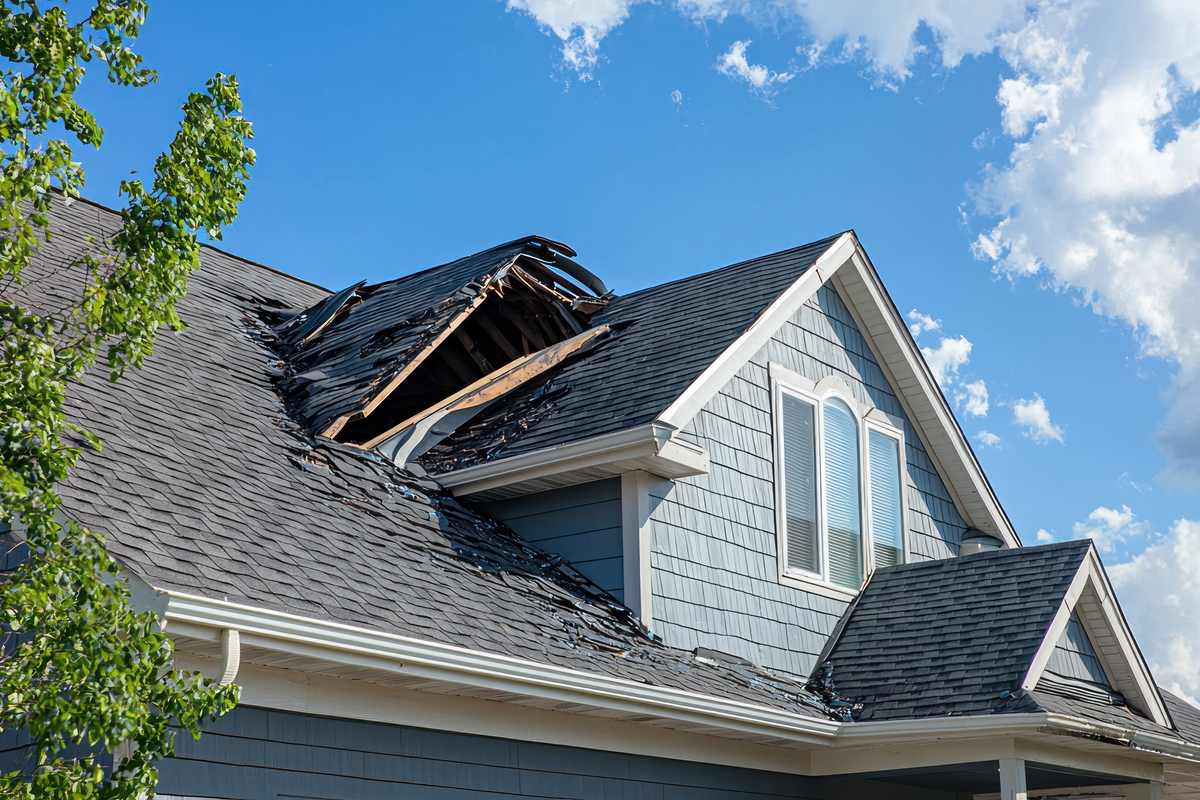
Roofs in southeast Texas work harder than most. Summer heat bakes asphalt shingles for months at a stretch, spring storms bring hail and straight-line winds, and hurricane season can push tropical rain far inland. Damage from that cycle rarely announces itself. It tends to start as a lifted edge or a hairline crack that nobody notices from the driveway. Over time, those small openings let water reach the decking and the attic below. Knowing the most common roof damage repairs helps you spot trouble early. Here’s what to watch for.
1. Replacing Missing or Broken Shingles
After a strong Texas wind, a quick look at the yard can tell you a lot. Shingle pieces in the grass or bare patches on the roof both point to the same problem. Cracked tabs are an early warning. Once a shingle is gone, the underlayment beneath it takes direct sun and rain it was never meant to handle alone. A professional repair starts by matching the existing shingle style and color as closely as possible. The damaged pieces come out first. New ones are then nailed and sealed to the course above so they stay flat. Surrounding shingles get checked too, since wind rarely loosens just one.
2. Resealing Damaged Flashing
Wherever the roof meets a wall or a chimney, thin metal strips called flashing direct water away from the seams. Those joints are where roof leaks start most often. Texas heat causes the metal to expand and contract daily, which slowly breaks down the sealant holding it in place. Rust spots and water stains on the ceiling near a fireplace are the most common signs. A proper repair goes beyond a quick bead of caulk around the edges. Loose sections are refastened and badly corroded pieces are replaced with new metal. The surrounding shingles are then worked back over the flashing so water sheds cleanly off the roof.
3. Swapping Out Cracked Pipe Boots
Plumbing vents poke through almost every roof in Montgomery County, and each one is wrapped in a rubber collar known as a pipe boot. That rubber sits in direct sunlight all year. Within several years, it can crack and pull away from the pipe it was meant to seal. Water then slips along the vent pipe and into the attic below. A small brown stain on the ceiling of a bathroom or laundry room is often the first clue. Smearing caulk over the crack only buys a little time. The lasting fix is a new boot, installed under the upper shingles and fastened so rain flows over it.
4. Tracing Hidden Roof Leaks to the Source
Water rarely drops straight down from the spot where it gets in. It runs along rafters and decking seams before it finally shows up on a ceiling, sometimes several feet from the real opening. Patching the area directly above a stain often misses the problem entirely. A professional leak repair begins in the attic, where water stains and daylight around nails reveal the true path. From there, the entry point on the roof is located and repaired. Soft or rotted decking around it is cut out and replaced. Skipping that step leaves weak wood under new shingles, and the leak tends to return within a season or two.
5. Restoring Hail-Struck Roofing
Ice falling from a spring storm leaves marks that are easy to miss from the ground. On asphalt shingles, hail knocks loose the protective granules and leaves dark, bruised spots. Metal vents and gutters tend to show small round dents instead. Even when nothing leaks right away, the bruising exposes asphalt to sunlight and speeds up aging. Granules piling up below downspouts are another useful clue after a storm. A hail repair starts with a close inspection of every slope, since impact patterns vary across a single roof. Depending on how widespread the damage is, the fix can range from targeted shingle replacement to a full new roof.
6. Fixing Wind-Lifted Ridge Caps
Along the very top of the roof, a row of folded shingles called ridge caps covers the seam where two slopes meet. That peak catches the strongest gusts during a storm, so it’s often the first area to fail. Lifted or missing caps leave the highest seam on the house open to rain. From the street, you might notice a gap in the line along the peak or a cap sitting at an odd angle. The repair involves carefully resetting or replacing the caps with fasteners rated for high wind. Any ridge vent underneath is checked at the same time for cracks that could let rainwater slip inside.
7. Correcting Sagging Gutters Along the Roofline
Heavy Gulf Coast downpours put serious weight on the edge of a roof. When gutters fill faster than they drain, the extra load pulls fasteners loose and causes sections to sag or separate. Overflow then spills against the fascia board and soaks the roof edge, which can rot the wood behind the drip edge over time. Water pooling near your foundation after rain is another sign the system isn’t keeping up. A professional fix includes rehanging loose runs and adjusting the slope toward each downspout so water moves freely. The drip edge and fascia get inspected as well, since roof damage often hides where the two meet.
Keeping Small Damage From Becoming a Big Repair
Roof damage almost always starts small and out of sight. A cracked pipe boot or a lifted cap costs far less to fix today than the soaked insulation and rotted decking it can lead to later. Paying attention after each storm season and acting when something looks off keeps a sound roof sound for years longer.
Tekton Roofing Solutions offers free roof inspections for homeowners across Conroe and the Greater Houston area. Our team explains what we find in plain terms and completes residential roof repairs built for Texas heat and storms. Each visit ends with a clear recommendation, whether that’s a quick fix or a larger repair plan. When overflow is part of the problem, our gutter services can install seamless aluminum gutters that move water away from your roof and foundation.
Send us a quick message, and our team will take a close look before a small problem grows into a costly one.
FAQs
How do I know if my roof has storm damage?
From the ground, look for shingle pieces in the yard, granules piling up below downspouts, and dents in metal vents or gutters. Inside, watch for new ceiling stains or a musty attic smell. Much of the damage hides on the upper slopes, so a professional inspection after a major storm is the safest way to know for sure.
Can a pipe boot leak be fixed with caulk?
Caulk can slow a pipe boot leak for a short time, but it doesn’t address the cracked rubber underneath. Texas sun breaks down sealant quickly, so the leak usually returns. The lasting fix is a new boot installed beneath the upper shingles and fastened properly, which restores the seal around the vent pipe for years.
When should a roof repair become a replacement?
Repairs make sense when damage is limited to a small area on a roof with plenty of life left. Replacement becomes the better choice when leaks keep returning, hail has bruised most of the slopes, or the roof is nearing the end of its service life. An inspection shows which side of that line your roof sits on.
Leave A Comment